
The Renin-Angiotensin-Aldosterone System (RAAS): A Step-by-Step Guide
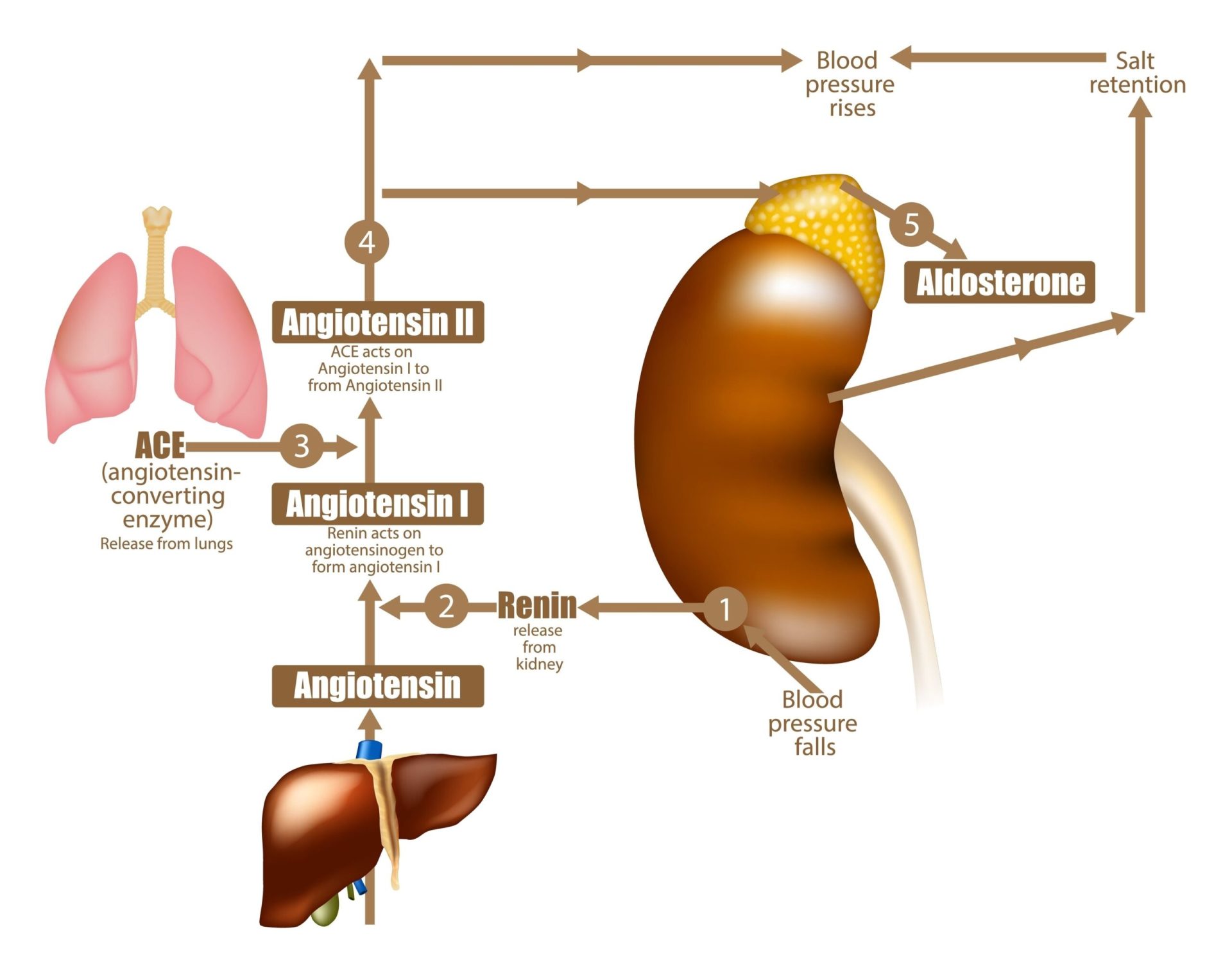
The renin-angiotensin-aldosterone system is a crucial hormonal cascade that regulates blood pressure, fluid balance, and vascular resistance. Here’s a comprehensive breakdown of this pathway:
Step 1: Stimulus Detection
The pathway begins when specialized cells in the kidneys (juxtaglomerular cells) detect one of three key stimuli:
- Decreased arterial blood pressure (detected by baroreceptors)
- Decreased sodium chloride levels in the distal tubule (detected by macula densa cells)
- Sympathetic nervous system activation via ?1-adrenergic receptors
Step 2: Renin Release
In response to these stimuli, juxtaglomerular cells secrete renin, a proteolytic enzyme, into the bloodstream. Renin is the rate-limiting factor in the RAAS cascade, making its release a critical regulatory step.
Step 3: Angiotensinogen to Angiotensin I Conversion
Renin acts on angiotensinogen, a protein produced primarily by the liver. Angiotensinogen is an ?2-globulin with 452 amino acids. Renin cleaves angiotensinogen at the Leu10-Val11 bond, releasing the decapeptide angiotensin I (Ang I).
Step 4: Angiotensin I to Angiotensin II Conversion
Angiotensin I is relatively inactive and serves primarily as a precursor. It circulates until it encounters angiotensin-converting enzyme (ACE), which is abundant in pulmonary capillary endothelium. ACE cleaves two amino acids from the C-terminus of Ang I, converting it to the octapeptide angiotensin II (Ang II).
Step 5: Angiotensin II Action
Ang II is the primary effector molecule of the RAAS with a half-life of only 1-2 minutes. It exerts its effects by binding to two main receptors:
AT1 Receptor Effects:
- Vasoconstriction: Causes contraction of vascular smooth muscle, particularly in arterioles
- Aldosterone synthesis: Stimulates the adrenal cortex to produce aldosterone
- ADH (vasopressin) release: Enhances water reabsorption via the posterior pituitary
- Thirst stimulation: Acts on the hypothalamus to increase water intake
- Sympathetic potentiation: Enhances norepinephrine release and inhibits reuptake
- Cardiac effects: Promotes cardiac hypertrophy and increased contractility
- Renal effects: Increases sodium reabsorption in proximal tubules
AT2 Receptor Effects:
- Generally opposes AT1 effects, including vasodilation and natriuresis
- Involved in tissue growth, development, and repair
Step 6: Aldosterone Production
Ang II stimulates the zona glomerulosa of the adrenal cortex to synthesize and release aldosterone, a mineralocorticoid hormone.
Step 7: Aldosterone Action
Aldosterone acts on mineralocorticoid receptors in the distal tubules and collecting ducts of the kidneys to:
- Increase expression of the Na?/K?-ATPase pump at the basolateral membrane
- Upregulate epithelial sodium channels (ENaC) at the apical membrane
- Enhance sodium reabsorption and potassium secretion
- Promote water reabsorption following sodium (osmotic effect)
Step 8: Blood Pressure Regulation
The combined effects of this cascade lead to:
- Increased total peripheral resistance via vasoconstriction
- Increased cardiac output via direct cardiac effects and increased preload
- Increased blood volume via sodium and water retention
- Net result: Elevation of blood pressure
Step 9: Negative Feedback
The elevated blood pressure provides negative feedback to the juxtaglomerular apparatus, inhibiting further renin release and establishing homeostatic control.
Alternative Pathways and Modulators
- ACE2: Converts Ang II to Ang(1-7), which has vasodilatory and anti-inflammatory effects via the Mas receptor
- Chymase pathway: Non-ACE production of Ang II, particularly in tissue-specific RAAS
- Aldosterone escape: Mechanism that limits excessive sodium retention
- Natriuretic peptides (ANP, BNP): Counter-regulatory hormones that antagonize RAAS effects
Clinical Significance
Understanding this pathway has led to the development of several drug classes:
- ACE inhibitors (e.g., enalapril, lisinopril)
- Angiotensin II receptor blockers (e.g., losartan, valsartan)
- Direct renin inhibitors (e.g., aliskiren)
- Aldosterone antagonists (e.g., spironolactone, eplerenone)
These medications are cornerstones in treating hypertension, heart failure, kidney disease, and diabetes-related complications.
References
- Forrester SJ, Booz GW, Sigmund CD, Coffman TM, Kawai T, Rizzo V, Scalia R, Eguchi S. Angiotensin II signal transduction: An update on mechanisms of physiology and pathophysiology. Physiol Rev. 2022;102(2):1037-1104.
- South AM, Tomlinson L, Edmonston D, Hiremath S, Sparks MA. Controversies of renin-angiotensin system inhibition during the COVID-19 pandemic. Nat Rev Nephrol. 2022;18(3):166-180.
- Riccioni ME, Bizzarri B, Mazza M, Tosoni A, Birocchi E. The renin-angiotensin-aldosterone system: new insights into chronic kidney disease. Int J Mol Sci. 2023;24(1):422.
- Guzik TJ, Mohiddin SA, Dimarco A, Patel V, Savvatis K, Marelli-Berg FM, et al. COVID-19 and the cardiovascular system: implications for risk assessment, diagnosis, and treatment options. Cardiovasc Res. 2022;118(3):752-769.
- Jackson CB, Farzan M, Chen B, Choe H. Mechanisms of SARS-CoV-2 entry into cells. Nat Rev Mol Cell Biol. 2022;23(1):3-20.